In many cases, the answer leads back to Clean Group, a commercial cleaning firm whose steady rise from a small regional service to a national authority says something rare about endurance in business.
Founded by Suji Siv, Clean Group sits among the few Australian companies with triple ISO certification—a standard met by less than 5% of the country’s cleaning contractors.
From medical centres and gyms to government facilities, the company has built its reputation inch by inch across every major city. Its client roster now exceeds 5000 -a record built through persistence as much as polish.
Siv remembers the early days vividly. “We began with a couple of vacuums, a few dreams, and the stubborn idea that commercial spaces deserve better,” he says. That simple promise matured into a network employing hundreds across three states and servicing corporations that command entire city blocks.
The rise of robotic cleaning
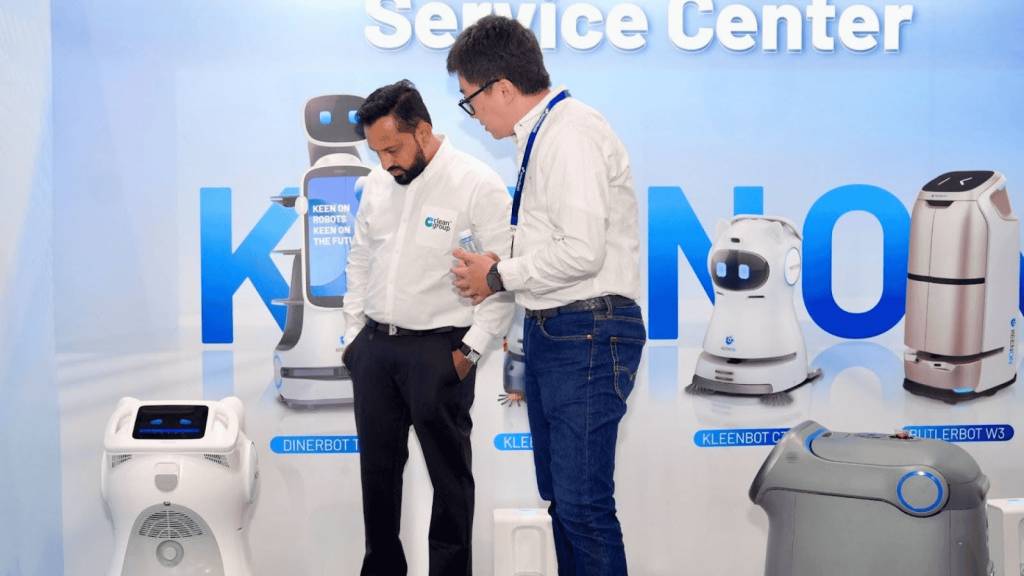
A new chapter began when Clean Group turned its attention to automation. Visiting Interclean Shanghai in 2025, Siv encountered robotic cleaning systems that could map entire building levels, adjust suction based on surface type, and operate through the night without supervision.
Smarter business news. Straight to your inbox.
For startup founders, small businesses and leaders. Build sharper instincts and better strategy by learning from Australia’s smartest business minds. Sign up for free.
By continuing, you agree to our Terms & Conditions and Privacy Policy.
That encounter changed the company’s direction. Instead of fearing automation, Clean Group invited it inside.
“Technology cannot replace people’s judgment—it enhances their results,” Siv explains.
The firm now deploys robotic floor scrubbers in large venues such as fitness chains and distribution centres, where precision and repetition determine cost and quality. Human staff oversee performance metrics through tablets rather than pushing carts through corridors at 3 am.
The result, according to Siv, is a measurable reduction in time wastage and energy usage, a shift from fatigue-driven work to intelligence-driven performance.
Robotics gave Clean Group something subtler than productivity – it reshaped perception. Clients began viewing cleaning as a strategic service aligned with sustainability targets rather than a nightly routine. Energy consumption dropped, chemical runoff diminished, and equipment lifespans stretched years longer. In an economy prioritisting cleaner production with fresh eyes, that mattered.
From servicing offices to setting standards
Clean Group’s growth carries weight partly because the cleaning sector remains fragmented, with many operators struggling to standardise results across regions.
The companyuses its ISO certifications not as a marketing flourish, but as a framework from which every contract is measured. Each location follows identical audit procedures and supervisors undergo periodic blind assessments to verify consistency.
That structure allowed expansion into interstate markets without losing coherence. A Brisbane client entering a Melbourne site expects the same scent, same polish, same quiet efficiency. Such uniformity has turned Clean Group into a reference point for procurement officers evaluating tenders across multiple states.
Sustainability without the slogans
In commercial cleaning, sustainability can’t just be marketing. It should mean lower chemical footprints, reusable microfibre systems instead of disposable paper wipes, and energy monitoring to track usage per square metre cleaned.
The company’s supervisors compare these records quarterly across its offices in Sydney, Melbourne and Brisbane. When results fall short, Siv prefers correction through method refinement rather than staff replacement. That philosophy, rare in an industry often judged by cost-per-hour contracts, has helped boost retention..
Clean Group’s website now catalogues these reforms, but its marketing isn’t just about what they have to say. The brand has a consistent 4.7-star rating across review platforms and 85 five-star reviews on Google.
For service categories often marred by inconsistency, those numbers signal credibility gained through practice rather than promotion.
An illustration of this comes from large corporate facilities where Clean Group’s robotic units track dirt accumulation using optical sensors. The data, fed back to supervisors, determines when and where chemicals are required eliminating guesswork and waste. This quiet precision distinguishes professional cleaning from routine janitorial work and has caught the attention of property managers conscious of environmental scoring systems like NABERS.
The Suji Siv’s broader vision
Through 25 years in a field rarely celebrated, Siv has turned consistency itself into strategy. He frames cleaning as infrastructure maintenance – a foundation for productivity, safety, and wellness.
Clients who once regarded cleaning as an invisible service now see it as risk management. A cluttered office can drain focus; an unclean clinic can erode patient trust; a spotless environment can lift morale without a word spoken.
Suji Siv’s ambition stretches toward making Clean Group synonymous with authority in commercial cleaning throughout Australia. The firm’s financials support that trajectory: roughly two million dollars in annual revenue with steady 5–10 % growth year to year.
Yet the measure that matters most internally isn’t profit but recognition among facility directors that quality cleaning saves money by preventing damage and prolonging asset lifespan.“Anyone can wipe a floor,” he says. “What matters is knowing why you’re doing it – and how your methods build safety and pride inside the places people spend their days.” As the industry tilts toward smarter operations and energy accountability, Clean Group appears well placed to define what responsible cleaning looks like in the years ahead.